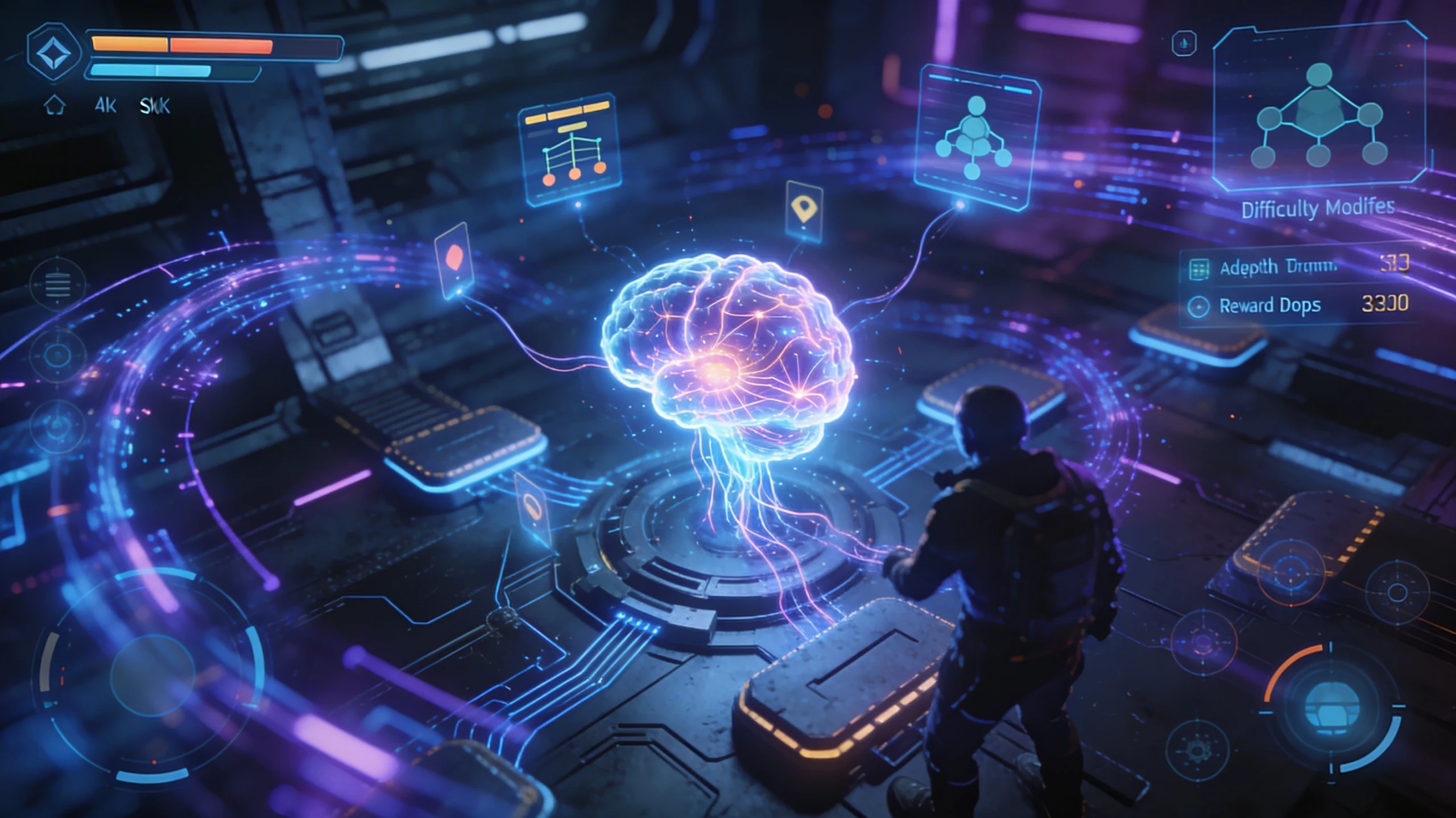
Player retention has become the holy grail of game development. It’s one thing to get someone to download your game it’s entirely another to keep them playing weeks or months down the line. Over the past few years, artificial intelligence has emerged as a surprisingly effective tool in this battle for player attention, though not always in the ways you might expect.
The gaming industry loses players at an alarming rate. Studies consistently show that mobile games, for instance, lose around 70 to 80% of their players within the first three days. That’s a staggering drop off, and it’s why developers have turned to AI driven approaches to understand player behavior and create more engaging experiences.
Dynamic Difficulty Adjustment: The Invisible Hand
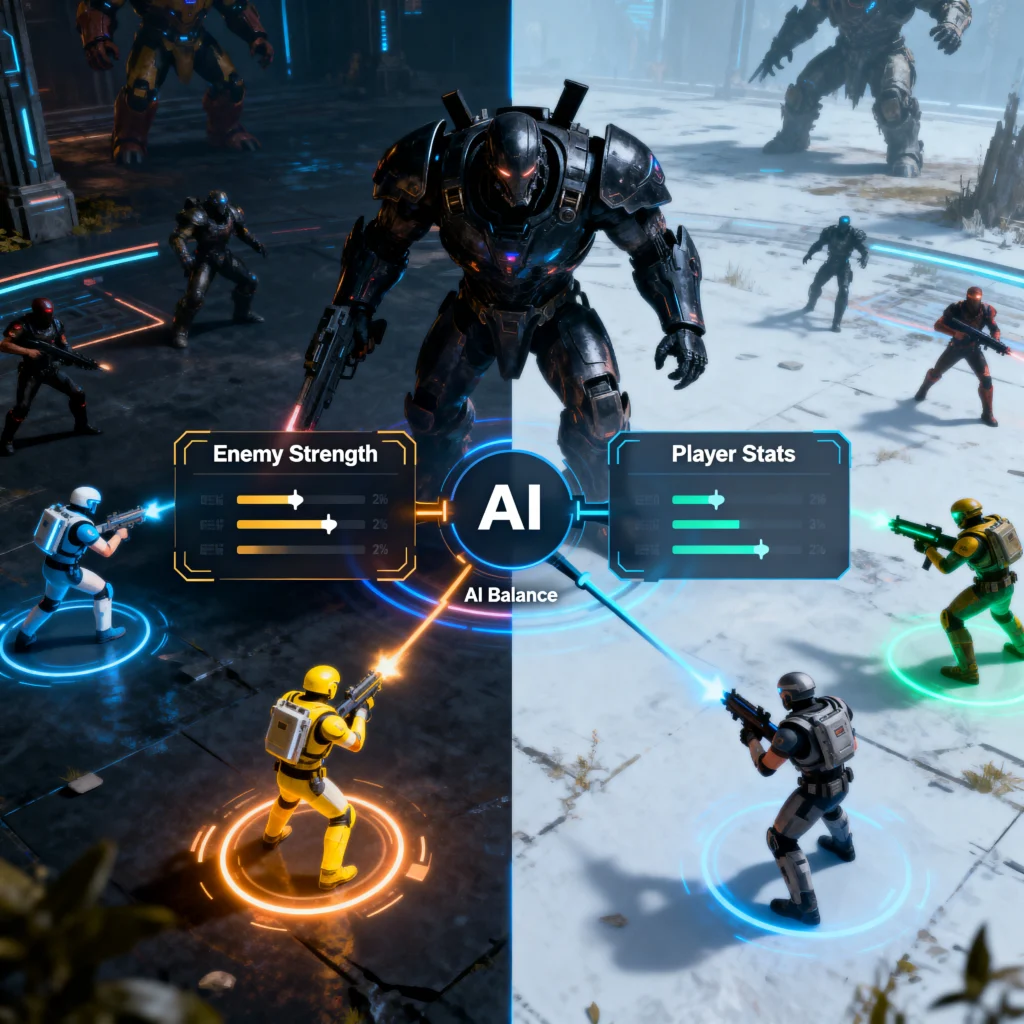
One of the most powerful retention tools involves AI systems that adjust game difficulty on the fly. The concept is straightforward: if a player keeps dying at the same spot, the game might subtly reduce enemy health or increase the player’s damage output. If someone’s breezing through content, the system can ramp things up.
Resident Evil 4’s original version famously used a basic version of this system back in 2005, but modern implementations are far more sophisticated. Games like Left 4 Dead pioneered what Valve called the “AI Director,” which monitored player performance and stress levels to adjust enemy spawns, item placement, and pacing. The brilliance here is that most players never consciously notice these changes they just feel like the game is perfectly calibrated to their skill level.
The retention impact is measurable. When players feel consistently challenged but not overwhelmed, they’re significantly more likely to return. The sweet spot sits right in that flow state where difficulty matches ability, and AI has become remarkably good at finding and maintaining it.
Personalized Content Recommendations
Think about how Netflix suggests shows you might like. Games have adopted similar AI driven recommendation systems, particularly in titles with extensive content libraries. This shows up in MMORPGs suggesting quests based on your play style, or battle royale games highlighting weapon loadouts that match your combat patterns.
Destiny 2 has experimented with highlighting specific activities and rewards for individual players based on their engagement history. If you’re a player who loves raids but rarely touches PvP, the game learns this and surfaces raid related content more prominently. This personalization makes the game feel like it “gets” you, which builds a stronger emotional connection.
The retention logic is simple: if players can quickly find content they enjoy, they’ll stick around. Generic recommendations lead to wasted time and frustration. AI powered personalization cuts through the noise.
Predictive Churn Detection
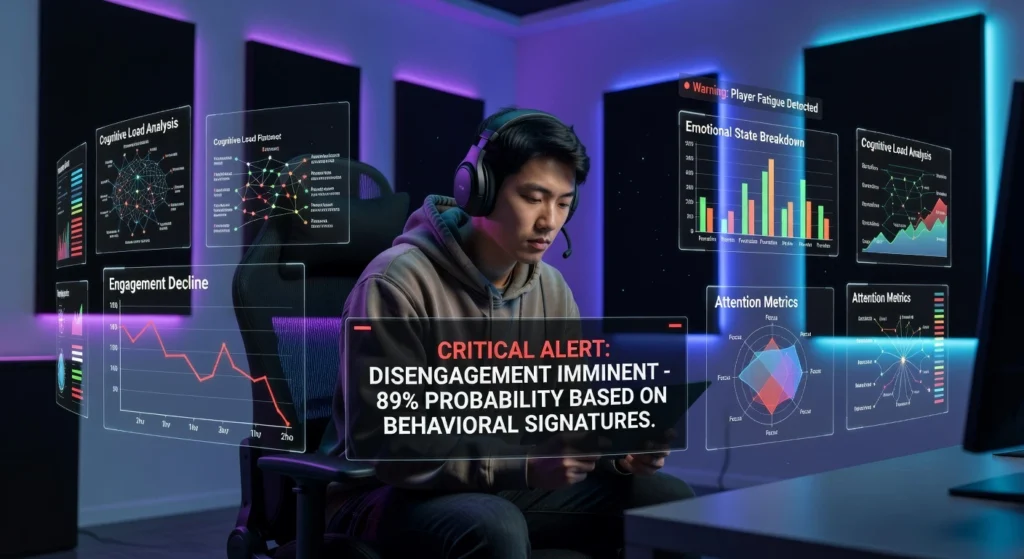
Perhaps the most commercially focused application involves AI systems that predict when players are about to quit. These models analyze thousands of data points login frequency, session length, purchasing patterns, social interactions, progression speed to identify players showing churn signals.
Once identified, these at risk players might receive targeted interventions: special in game rewards, personalized messages, limited time offers, or content recommendations. The ethics here get murky, particularly when these interventions involve aggressive monetization tactics, but from a pure retention standpoint, the approach works.
Major mobile games have reported 15 20% improvements in retention rates using predictive churn models. The key is early detection reaching a player who’s slightly disengaged is much easier than winning back someone who’s already uninstalled.
AI-Driven NPCs and Emergent Gameplay
Non player characters have traditionally followed rigid scripts, making game worlds feel static after initial playthroughs. Modern AI techniques are changing this calculation. Machine learning models can create NPCs that adapt to player behavior, remember past interactions, and generate more natural dialogue.
Middle earth: Shadow of Mordor’s Nemesis System, while not purely AI driven, demonstrated the retention power of dynamic, personalized antagonists. When enemies remember your previous encounters and evolve based on those interactions, the game world feels genuinely alive. Players return because their experience is unique something that’s difficult to achieve without intelligent systems.
More recent implementations use natural language processing to create more believable conversations, and behavioral AI to make NPCs react logically to player choices. When done well, this creates emergent narratives that keep players invested across multiple sessions.
Social Graph Analysis
Multiplayer games have learned that player retention is heavily tied to social connections. AI systems now map player relationships who plays with whom, communication patterns, cooperation quality to strengthen these bonds.
Games might use this data to encourage friend groups to play together through synchronized rewards, team challenges, or notifications when friends are online. Fortnite, for example, has mastered the art of making players feel like they’re missing out when their friends squad up without them.
The retention impact of social ties is enormous. Players with established friend groups in a game have retention rates 2 3x higher than solo players. AI helps identify these connections and creates systems that reinforce them.
The Balancing Act
Not all AI driven retention strategies deserve celebration. There’s a legitimate concern that some implementations prioritize engagement over player well being. When AI systems are tuned purely for maximum playtime or spending, they can become exploitative, particularly for vulnerable players.
The most ethical implementations focus on genuine enjoyment rather than addictive loops. They help players find content they’ll love, maintain appropriate challenge levels, and connect with compatible teammates. The goal should be creating better experiences, not just maximizing metrics.
Developers face a real tension here between business objectives and player welfare. The most sustainable approach builds retention through authentic engagement players who genuinely enjoy their time will naturally return rather than through psychological manipulation.
Looking Forward
AI’s role in player retention will only expand. Future systems might generate personalized content, create adaptive storylines, or use computer vision to detect player emotion through webcams (with appropriate consent, hopefully). The technology continues advancing rapidly.
What matters most is intentionality. AI can help create richer, more personalized gaming experiences that respect player time and intelligence. Or it can optimize for addiction and spending at any cost. The choice ultimately rests with developers and the industry norms we collectively establish.
The games that will truly succeed at retention won’t just keep players grinding they’ll give players genuine reasons to care.
FAQs
What is AI player retention in gaming?
AI player retention refers to using artificial intelligence systems to analyze player behavior and create personalized experiences that encourage players to keep returning to a game over time.
How does dynamic difficulty adjustment work?
AI systems monitor your performance in real time and subtly adjust game difficulty making challenges easier if you’re struggling or harder if you’re dominating to keep you in an optimal engagement state.
Are AI retention strategies ethical?
It depends on implementation. Strategies focused on improving player experience and fun are generally positive, while those designed purely to maximize playtime or spending regardless of player welfare raise ethical concerns.
Which games use AI for player retention?
Many modern games use some form of AI retention mechanics, including Destiny 2, Fortnite, Left 4 Dead, and most major mobile games, though specific implementations vary widely.
Can AI predict when I’ll stop playing a game?
Yes, predictive churn models can analyze your behavior patterns to identify when you’re showing signs of disengagement, often with surprising accuracy, allowing games to intervene before you quit.